18.05.2026
LANDCROS Mini Wins Award at SaMoTer 2026: What This Means for Those Who Work with Hitachi Machinery
We were in Verona and followed the process live.
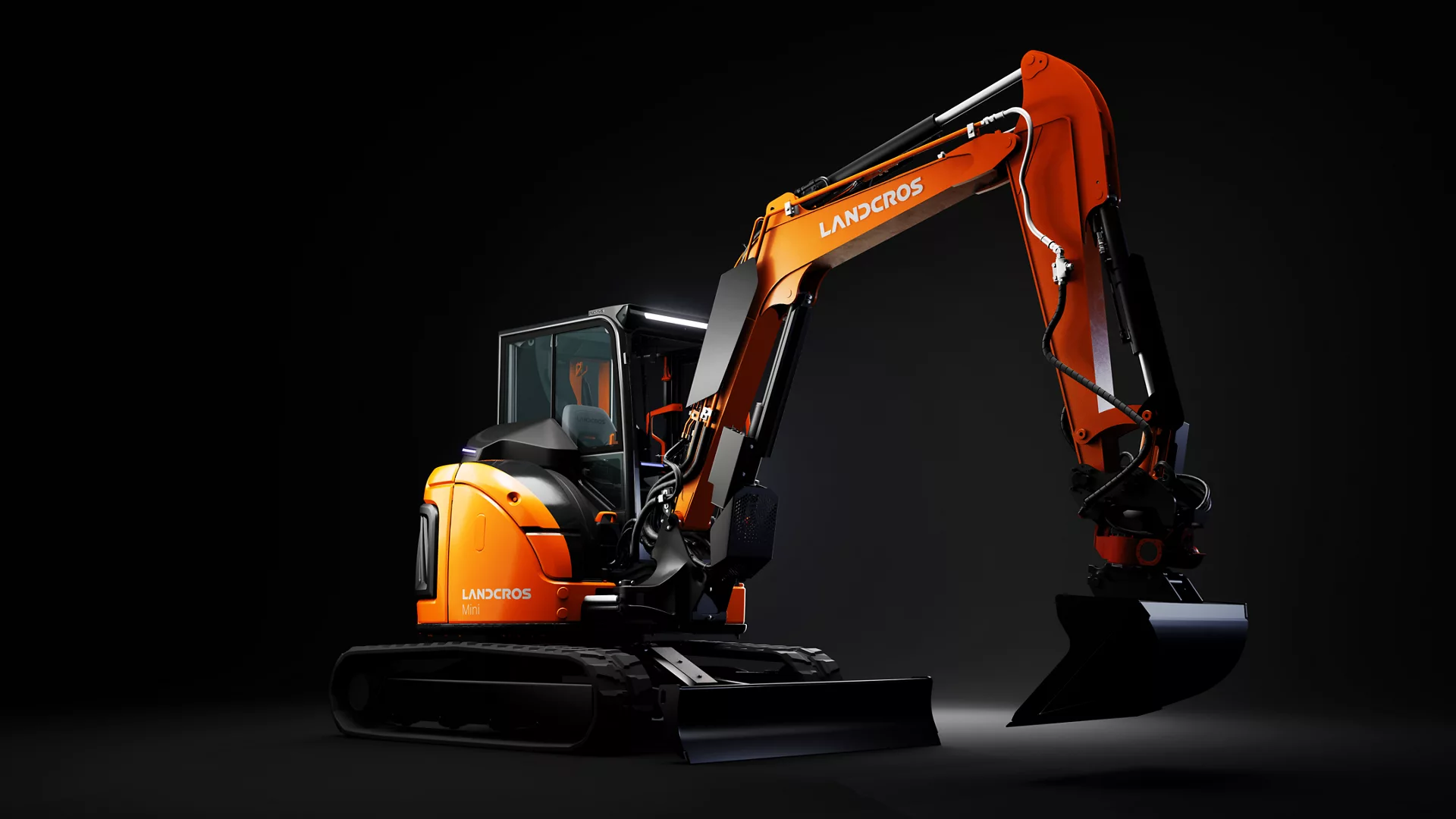
Among the awards presented during the 32nd edition of SaMoTer, there is one that is of particular interest to us: Hitachi Construction Machinery Europe won the Design Award and a technical mention in the hydraulic excavator category with the LANDCROS Mini, the five-ton concept machine that captured the attention of Hall 10.
The LANDCROS Mini is the manifesto of a profound shift in the way Hitachi – soon to be LANDCROS – conceives its machines. And we, who have been representing Hitachi in the Triveneto region for over sixty years, fully intend to tell you all about it.
The operator first, the machine secondly
To understand what’s new about the LANDCROS Mini, we need to start with a simple idea – one that’s almost revolutionary for the industry: the cab was designed around the operator, not the other way around.
It sounds obvious, but it isn’t. For decades, compact excavator designers have worked this way: first they defined the machine’s structure, then they figured out how to fit the controls into it. Hitachi wanted to flip this process – though they certainly weren’t the only ones on the market to decide to change their perspective: the starting point for the LANDCROS Mini became the operators themselves, with their movements, habits, and daily frustrations on the job site.
What Makes This Cab Stand Out
Let’s start with the most striking feature: the lighting. The LANDCROS Mini is equipped with an LED system linked to external sensors that detect people in the vicinity of the machine. When someone gets too close, the interior lights turn red. It’s an immediate warning that doesn’t require the operator to look at a monitor. On crowded construction sites, where blind spots remain one of the main risks for ground workers, this solution alone is worth the attention.
Visibility has also been improved by moving the windshield wiper motor to the right side of the windshield: clearing the line of sight on the left may seem like a minor detail, but anyone who works in tight spaces knows how much of a difference just a few extra centimeters of field of view can make.
There is also an integrated communication system – speaker and microphone – because operators spend their days coordinating with ground personnel but are effectively isolated in the sealed cab. A real problem, previously overlooked in standard designs.
The main display is flanked by a sliding secondary screen, designed to accommodate third-party solutions such as tiltrotators, assisted steering systems, or any technology the operator or job site requires, without further cluttering the interior with additional monitors.
And then there are the comfort features that anyone who gets into a machine every morning will recognize right away: joysticks with ergonomic buttons, removable travel levers that free up foot space, an extended handle, and a redesigned step for easier access. And three integrated storage solutions – the Backpack behind the seat, the Saddle on the side for boots and gear, the Nest built into the seat itself – plus a phone charging point within easy reach.
These aren’t optional extras. They are concrete solutions to needs that operators already had.
The method: designing digitally before producing the physical
The LANDCROS Mini was developed using virtual design tools and augmented reality—methodologies that have been standard in the automotive industry for years but applied at this level to compact earthmoving machines for the first time.
The concept was tested, refined, and validated in a digital environment before a single component was produced. This approach is called “phygital” and is the direct translation of digital design intelligence into physical objects. For the construction machinery sector, this represents a new frontier.
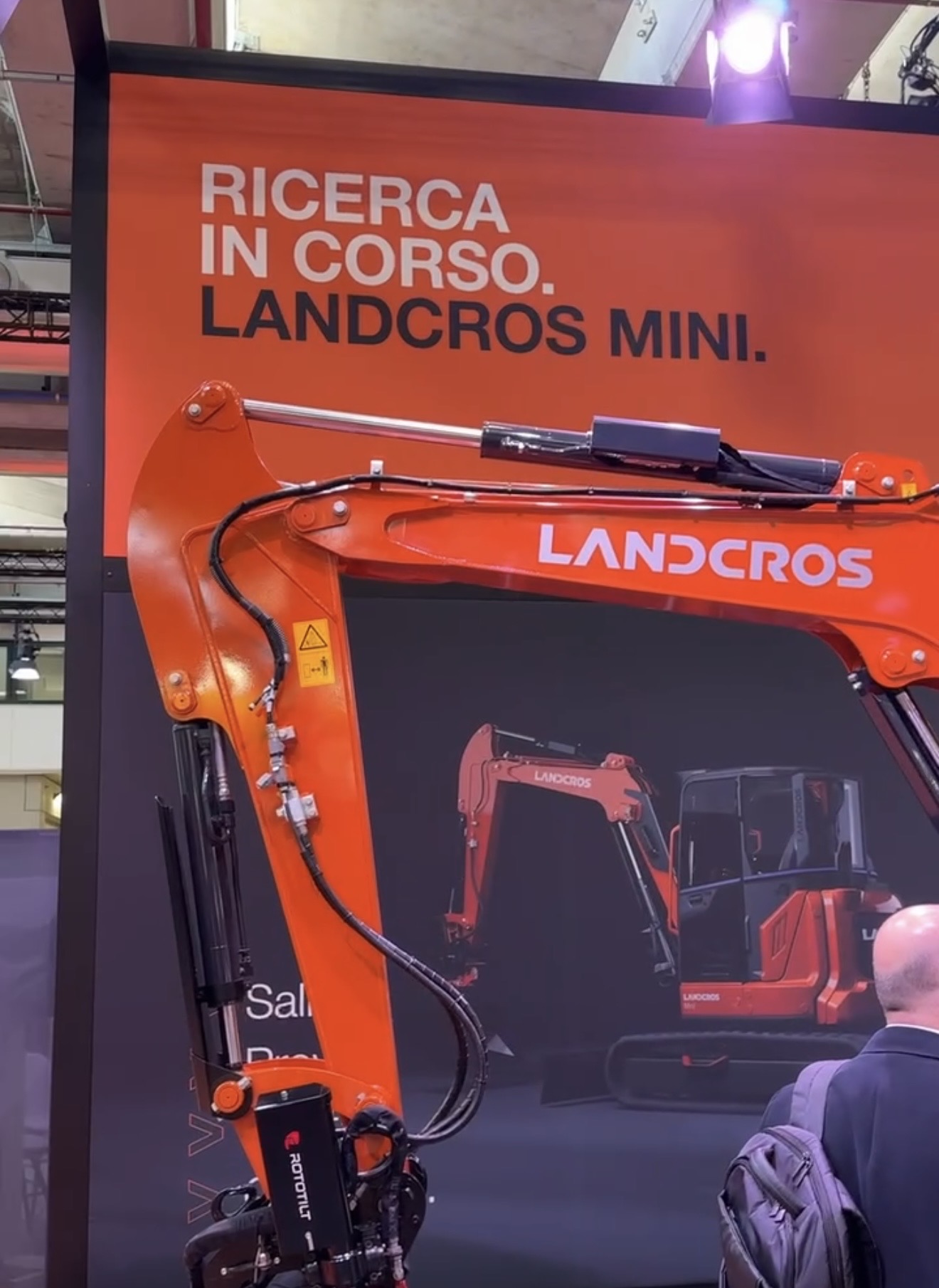
The practical result is a working prototype that you can touch and evaluate—not just a 3D rendering. In Verona, visitors could climb aboard, interact with every element of the cab, and test it based on their own experience on construction sites.
Italy as a Benchmark Market
It is no coincidence that this concept was unveiled at SaMoTer 2026. Italy is one of the most important European markets for mini excavators, with operators considered among the most demanding on the continent. Hitachi deliberately chose Verona to gather high-quality feedback: the reactions of those who use the machines every day will influence engineering decisions regarding the next generation of LANDCROS compact excavators.
For us, who have been selling and servicing these machines in the Triveneto region for decades, this is a positive sign. It means the manufacturer is listening to the market on the ground, not just sales figures.
What’s changing for Hitachi customers
The LANDCROS Mini is a concept and is not yet for sale, but the direction it points to is clear.
Hitachi is evolving toward a “solution provider” model: increasingly connected machines, designed around the operator, with a growing focus on integrated safety, ergonomics, and interoperability with third-party technologies. The rebranding to LANDCROS (scheduled for April 2027) is part of this same journey.
Those with Hitachi machines in their fleet – ZX excavators, compacts, and midis – can expect these principles to be progressively incorporated into production models. And those considering a purchase or fleet renewal today have a few more clues to understand where the brand is headed.
If you’d like to learn more about this transition or discuss your job site needs, our team is available in Belluno, at Via del Boscon 9. We’ve been Hitachi dealers in the Triveneto region for over sixty years – and we still have plenty to share about what we saw in Verona.